

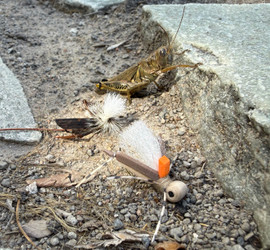
Shop Favorites: Terrestrial Fly Patterns
Posted by Nick Teynor on Sep 3rd 2026
There is absolutely no shortage of fly patterns these days. Hundreds of new patterns are added every year, and many of them go on to become “go-to” bugs in everyones fly boxes. We at the shop get asked all the time what our favorite flies are, so I figured since it is terrestrial/attractor dry fly season, I’d talk about some of the “go-to” bugs that are in our boxes and available at the shop. So let's start by talking about some of our favorite terrestrial and attractor patterns we fish here at home and across the West.
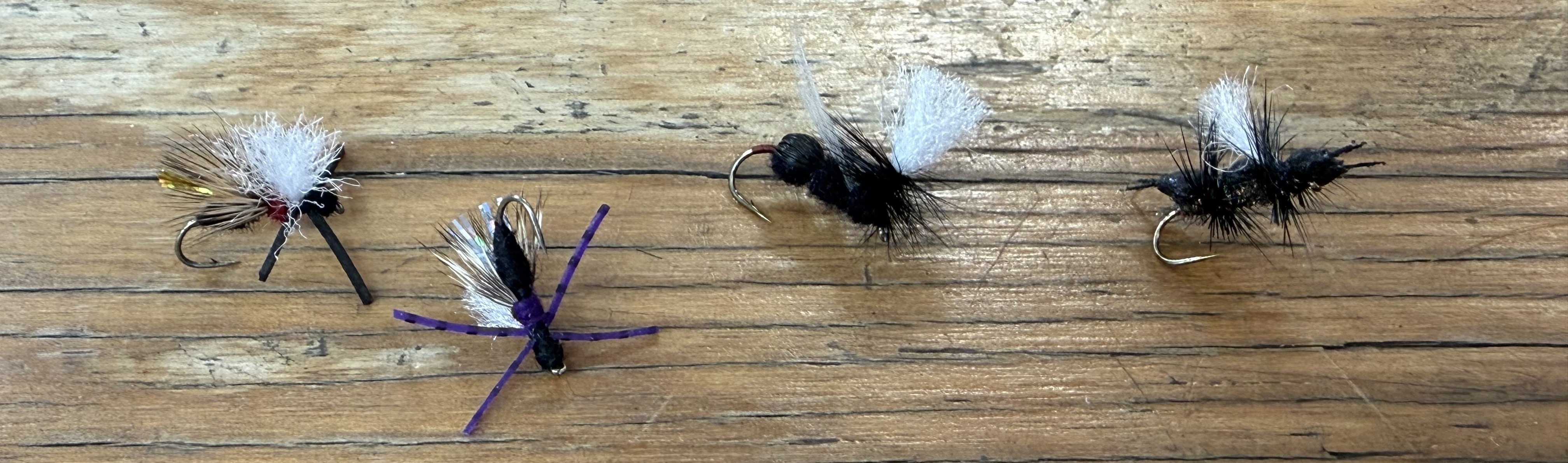
ANTS:
Ant Acid (#14-#16): The Ant Acid has been an effective fly in Utah and across the West for a moment now. The purple and red variations are staples for people heading to the Uinta mountain lakes and streams, and the Green River below Flaming Gorge.
Deer Hair Ant (#12-#16): This parachute ant pattern has proven itself on some of the most technical trout water in the world, and on our local fisheries time and time again. It sits low, but is still visible thanks to the parachute post, and can even support a small nymph dropper when fished in the larger sizes.
WRF BANT (#14): This fly comes from the mind of WRF Alumni Kigen Curtis. Kigen wanted a versatile terrestrial pattern that could mimic either an ant or a beetle, and this fly was the result after many tying sessions and outings on the water. If you’re not sure the fish want an Ant, or a Beetle, it’s time to put on a BANT, and let the fish do the rest.
BEETLES:
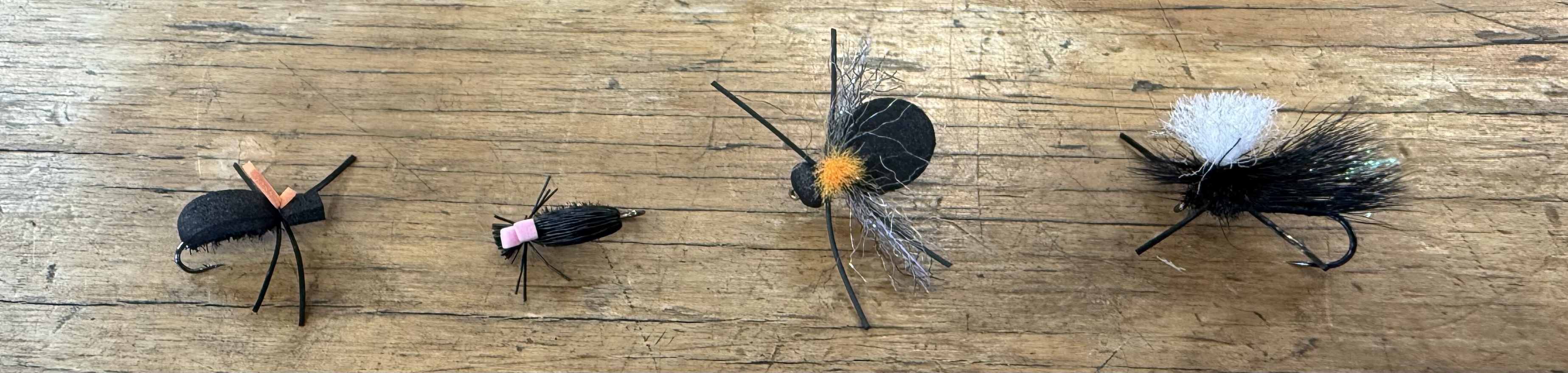
Crow Beetle (#14): This “OG” beetle pattern still catches fish, but much like Rodney Dangerfield, it “gets no respect” from this current generation of anglers. The Crow beetle hunts on any calm water, and like the Deer Hair Ant, has caught some very picky Henry’s Fork rainbows when nothing else would work. It works around here too, which is why it’s in my box.
Fat Head Beetle (#14-#16): A more “modern” Beetle, the Fat Head is a close cousin of the now discountinued Disco Beetle, and just as effective. The foam body helps this fly float in more turbulent water conditions, while the low profile and rubber legs gives this fly a life-like silhouette. Never overlook the beetle-especially if Ants, Crickets, and Hoppers aren’t working.
Gulp Beetle (#12-#16): A super basic, easy to tie beetle pattern. Everyone should have one of these or something basic like this in their box!
CRICKET(S):
Parachute Cricket (#10-#16): This is a classic Green River fly, and one that NONE of us at the shop forgets to bring with us when heading out to the Gorge. Big or small, the Para. Cricket can catch fish virtually year round on the Green, and it has proven to be an effective attractor dry fly on many small streams across Utah and the West.
HOPPERS:
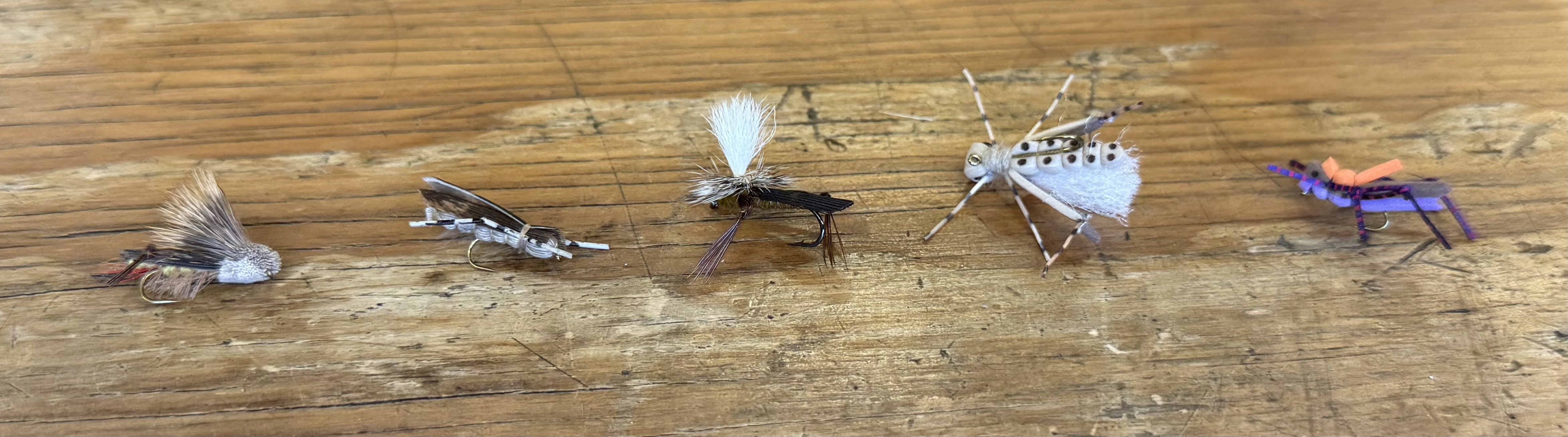
Dave’s Hopper (#12): Like the Crow Beetle, Dave’s Hopper is a classic pattern that should be in everyones terrestrial box. This fly has a proven track record, and still continues to pull fish on water across the globe.
Spring Creek Hopper (#12): This is the hopper we pull out when fish refuse the high profile foam hoppers that dominate the tying scene these days. This fly comes from Rene Harrop, and was meant to fool fish that have been hooked on many a hopper. It will fish best by itself, and on water that is not too turbulent.
Schroeder’s Parachute Hopper-Olive (#10): The Parachute Hopper has been a killer pattern for over 40 years, and it still continues to be a great hopper pattern. While often overlooked, Olive colored hoppers can be very effective-especially when the banks of your local waterways are still lush and green from summer rains. Hence, why I’m taking the time to mention this fly. Everyone thinks of hoppers in tan, yellow, pink, or even purple, while overlooking Olive. Don’t sleep on Olive Hoppers-you’ll be bummed if you do.
Thunder Thighs Hopper (#10): Buoyant enough to support a tungsten nymph (or two), while still maintaining a slimish profile that tempts pressured fish, the Thunder Thighs Hopper has made its way into many of our personal fly boxes. From casting to cruising fish on lakes and reservoirs, to prospecting on our local tailwaters, it works.
Morrish Hopper (#10-#14): This is a “classic” foam hopper that many of us in the shop turn to when fishing a dry-dropper rig, or when fishing a foam hopper solo. Big or small, the Morrish has produced good fish for us on both moving and still waters across Utah and the West.
ATTRACTOR DRY FLIES:
PMX (#10-#16): Olive, Orange, Peacock, Yellow-the PMX is a fishy bug that has caught us A LOT of fish over the years. Its low-floating profile and rubber legs create a buggy silhouette that trout everywhere love, and you simply match the color and size of your PMX to mimic whatever bug you’re trying to imitate. Ants, Beetles, Cicadas, Crickets, Hoppers, Stoneflies, Caddis-this bug covers the spectrum.
Chubby Chernobyl (#10-#16): The fact that this fly is on our list should be of no surprise to anyone. Love’em or hate’em, the “Chubby” is another attractor dry fly that catches trout everywhere it goes. Effective when fished by itself, or as the bobber in a dry-dropper rig, it’s a fly that is in just about everyones fly box these days. Like the PMX, all you need to do is match the hook size and color of your Chubby to water and bugs you’re fishing, and let the fish do the rest.
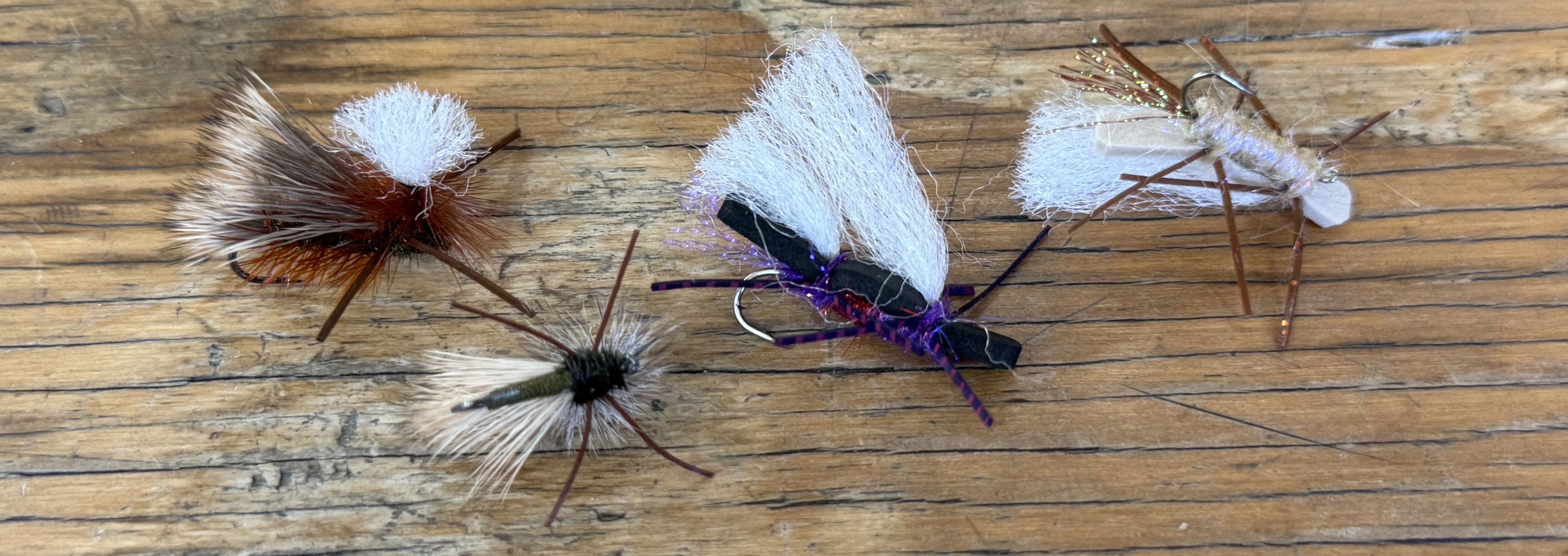
There you have it. Some of our favorite shop terrestrials and attractor dry flies that we’ll be fishing for the next two months. If you have any questions about when, where, and how we fish these flies, feel free to check out the [WR]F.A.Q. post we did on fishing Terrestrials HERE. Otherwise, come on by the shop if you’re in the neighborhood, and feel free to talk to us about this and other fishy things. Coffee’s on at 8 AM!
