
Fishing Reports
Northern Utah Fishing Reports: July 2nd, 2026
We're carrying lots of great fishing momentum in to July and I hope everyone has been able to get out and take advantage! This month we'll see the bulk of our biggest most exciting hatches wane and slide more in to our daily drivers but for now we still have Green Drakes around, Golden Stoneflies, Yellow Sallies, PMD's, Caddis and more! The Middle Provo & Green continue to fish lights out, small streams & freestones are hanging on thanks to recent precipitation, and the high country is available for those seeking cooler temps and solitude. Options abound, we're in the thick of it!
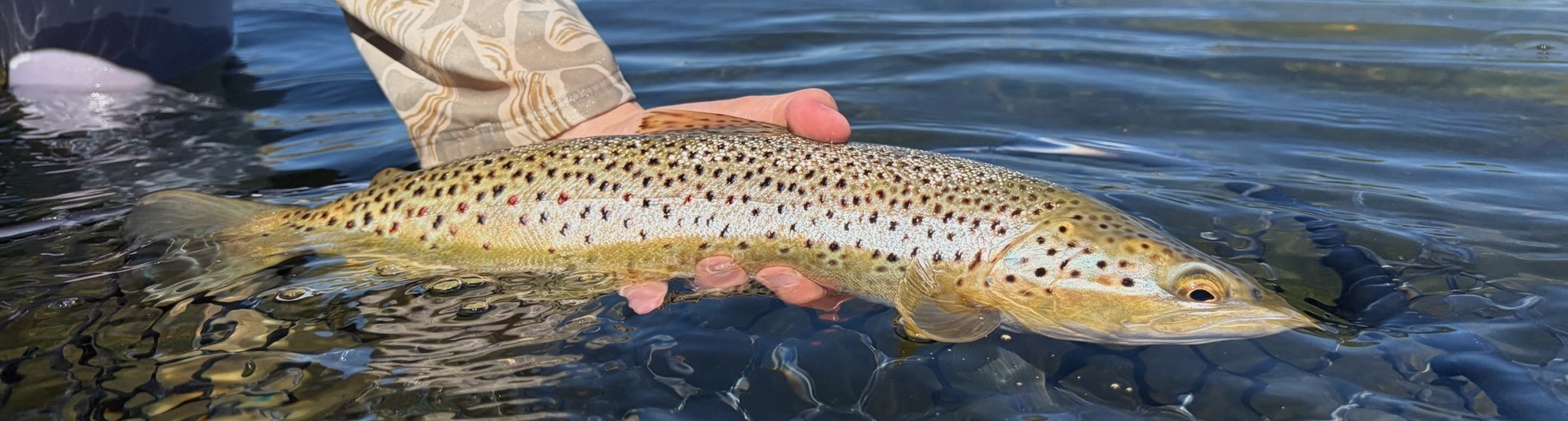
Provo River
Middle Provo:
As of today (July 2nd), the Middle Provo is flowing at 290 CFS out of Jordanelle Reservoir, and 167 CFS at River Road Bridge. Not much has changed here aside from the continue of the Green Drakes up the river system. For now, we're still getting awesome reports of drake fishing but we do expect this to start waning over the next few days. Our smaller and more consistent Summer bugs (P.M.D.'s, Yellow Sally stoneflies & Caddis) are around, and accounting for some good fishing through all parts of the day. Midges (#20-#26) are always around and fish are definitely feeding on them-especially up closer to the dam. If you're going to the Middle Provo, make sure you're packing Pale Morning Dun (P.M.D.) mayfly nymphs and dries (#16-#18), Green Drake nymphs and dries (#12), Yellow Stonefly nymphs and dries (#12-#16), and Golden Stonefly nymphs and dries (#8-#12).
Lower Provo:
The Lower's flow is currently flowing at 498 CFS out of Deer Creek which is a relatively high but still fishable flow. These flows may spread the fish out a little bit more, and push them closer to the rivers edge too. This could be seen as a good thing as inner tube and fun-floater traffic will increase with the incoming hot temperatures. That being said, fish will still seek out deeper channels and holes, and other super fishy structure such as drop-offs, pools, around and behind rocks, and foam / bubble lines are always good places to fish. The Summer aquatic insects Pale Morning Dun (P.M.D.) mayflies #16-#18, Yellow Sally Stonefly #12-#16, Caddis #14-#18) are hatching, so make sure to have nymphs and dries for all of these insects. Be on the lookout for fish up and eating Caddis (#14-#18) and Midge dry flies (#20-#30) along the edges in the mornings and evenings, and nymphing with midge larva and pupa patterns (#20-#24), sow bugs, P.M.D. mayfly nymphs (#16-#18), and small attractor nymphs (#16-#20) can move fish if there is no surface activity. If you don't want to look at a bobber, swinging soft hackles or fishing streamers has been working well too. Fishing an ant, beetle, or terrestrial attractor with a dropper up the banks for those sunny, warm afternoons wouldn't be a bad idea either.
WEBER RIVER
The Weber River between Rockport and Echo reservoirs is now flowing at 276 CFS at Wanship, and the gauge at Coalville is reading 315 CFS. This is a good fishing flow, but due to the Weber's narrower river channel, it will push fish closer to the river edges. Look for PMD's in the late mornings, Caddis in the late evenings and some Yellow Sallies throughout the day. This is also a good time to prospect around structure and up the grassy banks with ants, beetles and hoppers. Flows out of Echo Reservoir to Morgan are now currently at 319 CFS. Like the Middle Weber, this is a very fishable flow, but a flow that will push fish closer to the rivers edge. Flies to use for the Middle and Lower Weber will be identical to what we are fishing on the Lower Provo.
GREEN RIVER
The Green Rivers below Flaming Gorge continues to fish awesome and which section is fishing best can depend on the day. If you're heading out to float, pick whatever section you like and enjoy the ride. If the river traffic is getting you down, put on super early in the morning or do an evening float for the Caddis hatch. There are ways to find solitude on this river! Flows on the Green River below Flaming Gorge are getting a small bump and the daily average will increase +50 CFS per day up to 1950 CFS. This is a fairly negligable change and shouldn't affect the fishing
On any given day, and on any given section of river, you're likely to see PMD's (#16-#18), Caddis (#14-#18) and Yellow Sallies (#14-#16). Cicadas may still move fish too, but we've been moving ore toward smaller ants, beetles and attractors as the fish get more weary. Switch up your insects if you aren't getting eats! Just because one insect is the most abundant, doesn't mean they aren't picking off something else! Cicadas (#8-#14), Chubby Chernobyl patterns (#10-#14), Parachute Crickets (#12-#16), Flying Ants (#14-#18), Beetles (#14-#18), and dropping a Frenchie (#14-#18), Zebra Midge (#16-#22), Perdigon (#14-#20), Sow Bug/Scud (#16-#20), could potentially pick up fish. If its really windy, or cloudy, I wouldn't hesitate to try fish a streamer, and cover as much water as possible.
If you're headed over there, make sure to stop in and see the WRF Guides crew at Yellow Dory Fly Shop (435-790-6465) for all of your shuttles, last minute flies and tackle, and most up to date reports! If you need somewhere to stay, book a room at the newest place in town, Kestral Cove Lodge.
Uintas & OTHER WATERS
Mirror Lake Highway:
Nothing new or revolutionary to note in regards to the high country other than that the Upper Provo is getting quite low and anglers should tread lightly and monitor water temps, or avoid these low water stretches all together. For those fishing the lakes, many will fish very similarly, and the main factors are going to be how far do you want to hike, and what species are you after? There is so much information online about the different hikes, trailheads and lakes so it would be futile to try and replicate that here. Being said, grab a map and dig around online (trip reports, hiking forums, etc...) and find somewhere that looks nice, and a place that meets your desires for a day out on the trail. Fly selection up here is pretty simple: Terrestrials, attractor style dry flies, damsel flies, callibaetis mayflies, balanced leeches, and small streamers should all do the trick. I'm usually going to start by looking for fish sipping and cruising the edges to throw dry flies at, and then switch to a small leech or streamer if I can't spot anyone. Check our our Frequent Angling Questions - High Country for a crash course in getting after it up there.
Small Streams:
Thanks to the cool down and precipitation we had last week, our small streams are still holding strong! With that being said, most of our major hatches have come and gone on these streams. Just like most of our other waters around here, look for fish up on PMD's and Caddis and don't hesitate to prospect around with Yellow Sallies, Golden Stoneflies, ants, beetles, terrestrials and attractors. If one was inclined to drop a little beadhead behind their dry fly, jig style nymphs (#14-#18), Frenchies (#14-#18), Caddis nymphs (#14-#18), Stonefly nymphs (#12-#14) and otherwise will move fish.
Stillwater:
Both Scofield and Strawberry Reservoirs are fishing well from the shore with a variety of flies and technoques. Deer Creek Reservoir and Jordanelle Reservoir both conitunue to fish well at times, and are great options if you can't go as far as the 'Berry to fish. Fishing a variety of dry-dropper rigs, streamers, balanced leeches, Midge Pupa patterns (i.e. Chironomids), and slowly stripping larger soft-hackles can be effective during the late-mornings and afternoons-especially if there is a breeze. June is also a good month to start thinking about chasing carp, bass, and sunfish as the water and weather warm up. So if you want to try something a little different, fishing for "warmwater" species is a great way to have some fun with a fly rod.
Tips
This time of year, I'm carrying a myriad of leader & tippet sizes and adjusting to the fishing conditions as needed. For most local fishing, a 9' 4X leader should cover your bases as long as you have 4x, 5x, & 6x tippet to adjust as necessary. For small stream fishing, we'd recommend a 7.5" 3X or 4X leader, and 3X-5X tippets.
Fly Recommendations
Dry Flies:
Ants (#12-#18)
Beetles (#12-#16)
Cicadas (#8-#12)
Crickets (#10-#14)
Griffith's Gnat (#18-#22)
Parachute Adams (#12-#26)
Timmy Green Drake Cripple (#12)
Colorado Green Drake Dun (#12)
Furimsky Green Drake (#12)
WRF Impearsonator (#12)
Purple Rooster (#14-#18)
Chubby Chernobyl (#10-#16)
X-Caddis (#14-#18)
EZ Caddis (#14-#18)
Egg Dropper Stonefly (#10)
Nymphs:
Gray RS-2 (#18-#24)
S.H.E. (#18, #22)
Barr's P.M.D. Emerger (#16-#20)
Duracell (#16)
Blowtorch (#14-#16)
Juju Baetis (#18-#22)
Prince Nymphs (#12-#18)
FB Pheasant Tail Nymphs (#12-#22)
Hare's Ear Nymphs (#12-#18)
Cased Caddis Larva (#16-#20)
Zebra Midges (#16-#22)
Copper Johns (#12-#16)
Neo 20-Incher (#12)
Pat's Rubber Leg Stonefly (#8-#12)
Iron Sally Stonefly (#16)
Soft Hackles:
March Brown Spider (#14)
Hot Spot Spider (#12-#16)
Partridge & Yellow (#14-#16)
Partridge & Orange (#14)
Partridge & Olive (#14)
Partridge and Peacock (#16)
Pheasant Tail Soft Hackle (#12-#18)
Red Ass Soft Hackle (#18)
Snipe and Purple SH (#16)
Black Soft Hackle BH Thorax (#18)
GN Soft Hackle BH Thorax (#14-#18)
Tan Soft Hackle BH Thorax (#14-#16)
Olive Sparkle Soft Hackle (#16)
Olive Graphic Caddis (#16)
Streamers:
Leeches (#8-#12)
Olive and Rusty Sculpin
Patterns (#6-#12)
Platte River Spider (#4)
Shiela Scuplin (#6)
Sculpzilla (#8)
Balanced Leeches (#10-#14)
Wooly Bugger (#8-#12)
It's been busy out there with other anglers, and some of you REALLY need to read up on river etiquette! Be self-aware while on the water, spread out, ask people if they're ok with sharing the water with you before just jumping in, give each other space, and treat others as you'd like to be treated; there is plenty of room for everyone. If you are intent of fishing a specific piece of water; get there early! If you're having a hard time finding space; fish the pockets, edges and banks that are often overlooked. As always, in order to avoid bad river etiquette, it's important to know the basic ins an outs of how to interact with each other on the water. Check out this video from Redington on basic fishing etiquette Here.
*PSA: Spawning season for the local our local Cutthroat and Rainbow trout will start to spawn throughout the spring and early summer months,and we as anglers and good stewards of the resource will need to watch where we are fishing and stepping to aviod their redds. A majority of our Cutthroat fisheries are closed to fishing until the second Saturday of July to protect the spawners and their redds, so make sure you check the Utah fishing regs for closures before you venture out. It could save you an expensive ticket! We have posted multiple social media posts, and written multiple blog posts about why it is important to leave ANY and ALL spawning fish alone, but if you haven't seen them or understand why leaving spawning fish alone matters, you can read about why we need to respect spawning fish by clicking on the link I've provided for you Here.*
Utah streamFlow Resources
The best information for river flows on the Middle and Lower Provo are through the CUWCD Wesbite. You can find that info Here.
For flow information on a majority of the smaller streams in the state, we use the USGS Website. You can find that info Here.
For flow information on other tailwater fisheries in the state, and surrounding states, we use the USBR website. You can find that info Here.

