What’s a Fly Worth?
Posted by Nick Teynor on Feb 18th 2026
Hello there! My name is Nick Teynor. I’ve been working for Western Rivers Flyfisher for 20 years, and I’ve been tying the winter assortment of “Shop Guy” flies for the last six years.
I noticed there have been quite a few comments about the flies I tied for the shop this year on our Instagram page. Since there seems to be so much speculation about the price and quality of the shop flies, I figured I’d write a post about where they came from, why we offer them, and why the “Shop Guy” flies are more expensive than other ones we sell. Hopefully this blog post helps you appreciate the value of well developed and well made fly.
Fly shops offering “in-house” tied flies meant for local waters is nothing new, and has been a standard practice in high quality shops for decades. Whenever I’m on a road trip, I always make it a point to see if any of the shops I visit offer shop flies for a variety of reasons. I like to support local shops and tiers. I get a confidence boost from flies that are specifically tied for the waters I’m going to fish. More often than not, shop flies are well tied and use good materials. I’m also always on the lookout for flies I’ve never seen before, because they [unique shop flies] get my creative thoughts flowing, and motivate me to tie my own versions and variations when I get home. Because of their custom nature and limited availability, shop flies have always been more expensive than flies that are offered commercially. Knowing this, I’m willing to spend a little more money on these flies because I know and appreciate the effort it takes to develop and tie them.
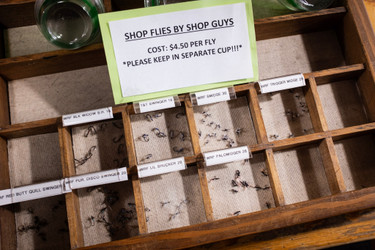
In regards to Western Rivers selection of shop bugs, we’ve done small-batch custom fly-tying orders for many years. Around 10 years ago we started offering a shop-fly bin, with flies tied by shop staff for local insect hatches on our local waters. This was spearheaded by Kigen Curtice, who was a shop staffer and small streams guide for Western Rivers, and a very talented fly tyer. He started offering his creations through the shop, and over the years, other shop folks started adding their flies to the bins too.
Due to the shop being increasingly busier over the last couple of years, we haven’t had as much time to tie flies for the shop bins, so our shop flies are only offered at certain times of the year, and we pride ourselves on offering high quality, effective flies for our local hatches and waters. Here’s what makes our shop flies different from the other commercial flies we sell:
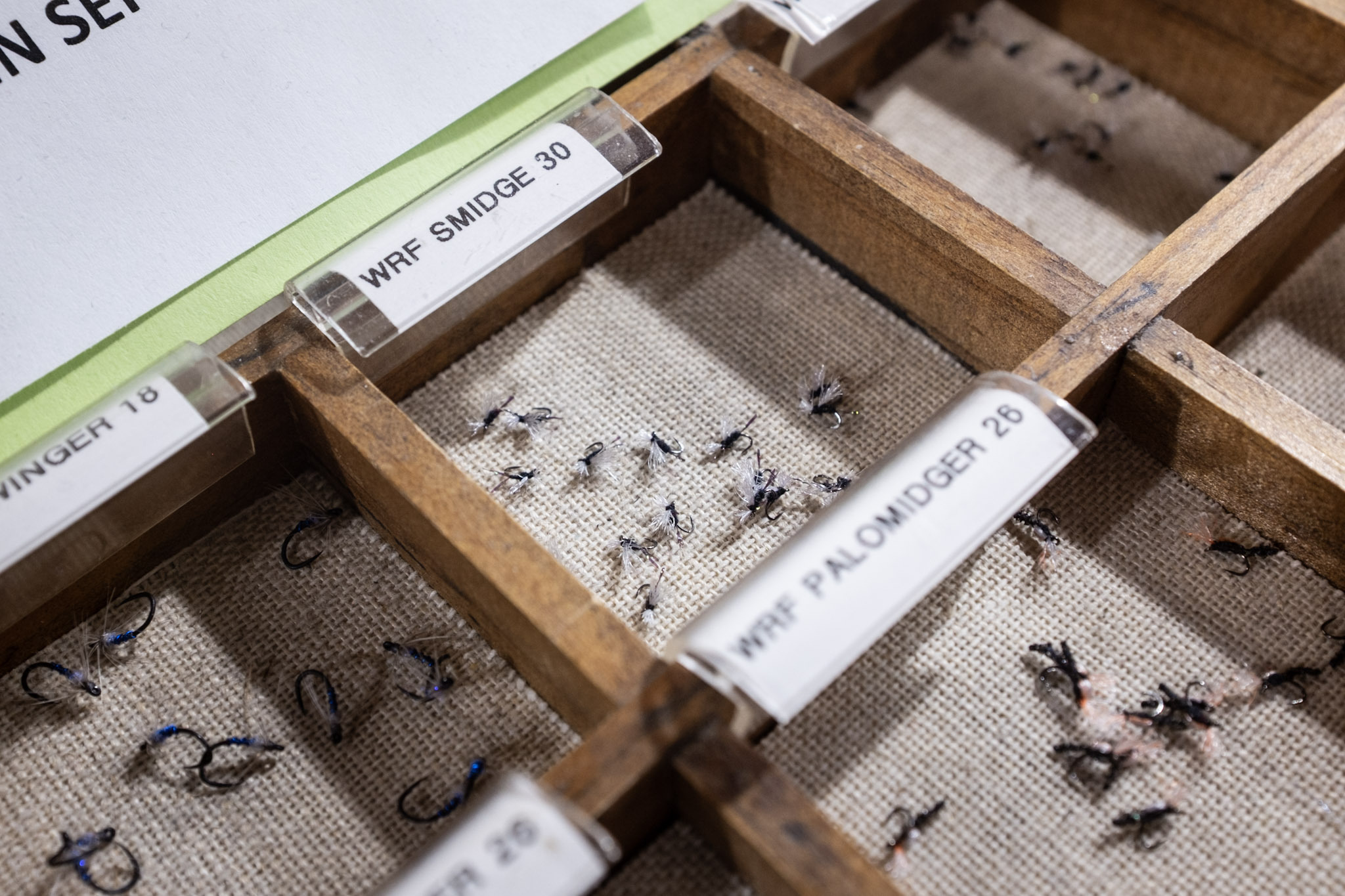
First: The shop flies are not run of the mill, commercially available patterns. They’re also not just re-branded versions of Zebra Midges or Bling Midges-flies that are universally known to be super easy to tie, and have a multitude of spinoffs. The “Shop Guy” flies, especially the tiny ones, were created because we couldn’t find any commercially tied patterns that were tied as small as we needed (#26-#30) for the midge hatches on our local fisheries, or tied to the quality or specs we wanted.
As a result, the “Shop Guy” flies are unique to our shop, and we developed these bugs over years of fishing, testing, and tweaking them on our own time. We use them for our personal fishing throughout the fishing season, and we wouldn’t sell them (at any price) if they didn’t work. What’s in the bin now are flies that were made specifically for the winter season on our local fisheries, which is why there are so many small midge emergers, dries, and soft hackles.
Folks have made comments about how expensive these flies are in relation to their size. To be clear: We do seasonal flies for the shop fly bin, and ALL the “Shop Guy” flies, regardless of size, are a set price of $4.50. Streamers, hoppers, mice, or tiny dries-they’re all $4.50 a fly. Also, just because a fly is small, doesn’t make it any easier to tie, or negate its value.
Tying tiny dry flies and emergers that are durable and effective takes skill. Few people are willing to take the time to tie flies this small, which is why you see few to any dry flies commercially tied smaller than a #26. Any of you who have tied dry flies and emergers on #26-#30 hooks can appreciate the skill and patience required to tie them well.
Secondly: The price reflects all the time and energy that was put into developing and tying the flies. A lot of hours were spent tying and fishing these bugs on days off, and if the shop didn’t sell the flies at a price that benefited both the shop and tyer, we would not tie and sell our patterns. It simply wouldn’t be worth our time and effort to offer our flies through the shop.
Thirdly: We don’t cut corners. It has been inferred on the interwebs that we use inferior materials to make our flies. I can tell you this: We don’t use cheap hooks or materials. These flies are tied on Gamakatsu C12-BM hooks, Tiemco 2499 SPBL, 201R, and 2488 hooks, and we tie these flies the exact way we do for ourselves: With the best materials we can get our hands on, and going the extra mile to make the flies more durable (double whip finishes, UV resin on all thread / tinsel bodies, counter ribbing hackles, etc.).
For this current batch of winter shop flies, I used EP Trigger Point fibers, Whiting Coq De Leon hen hackle, Whiting Herbert Miner hen hackle, Veevus and Uni threads, fine Largatun and XS Ultrawire, etc. If you think that these are inferior materials, then I’m genuinely curious how/why what you would use would be better. I can tell you this: The fish on both the Middle Provo and Lower Provo are heavily pressured and picky, but they like these flies year after year, which is all that really matters.
So, if this helps clarify why the “Shop Guy” flies are $4.50 a fly, great! If you don’t think they’re worth it, you don’t have to buy them. We offer a robust selection of less expensive, commercially tied flies. At the end of the day we know we sell effective flies that are tied well, work consistently, and the local trout like them. We don’t tie them to satisfy keyboard “experts” on social media; we tie them to share with our shop customers-the ones who look forward to buying and fishing these flies. We sell out of them every year, so we’re doing something right.
If you’re a local, and would like to learn how to tie them yourself, feel free to come by the shop. You can grab a cup of coffee or tea, and I’ll help you get the materials you need. I’ll even give you tips on where, when, and how I fish them if you’d like to know how to use them to their full potential.